
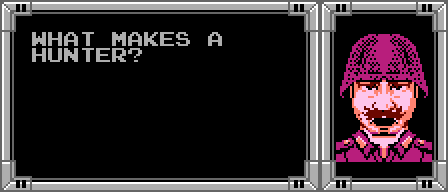
There are many ways of knowing the world, interacting with it, and participating in it. On his way to understanding sorcery and “separate realities”, Castaneda learns to understand the ways of the hunter and warrior. This book and its lessons are for anyone interacting with the hidden realities and forces of nature; the people who listen to the wind, who follow the tides, collect bird feathers as auspicious talismans, and peek behind the curtains and veils…
Here, I share the specific lessons of a hunter, drawn from Don Juan. In part two I’ll discuss the lessons of a warrior. I’ll start with the various definitions of the word “hunt” to get us on an equal understanding of its meaning in a larger context:
Hunt n. or v.
1. to pursue and kill a wild animal for food or sport
2. search determinedly for someone or something.
3. an oscillating motion around a desired speed, position, or state.
A hunter in our context is not just a person killing animals, it's all of us who are undoubtedly in search of something, someone, or some state of being. The things that make a hunter are the things that help draw you close to your target.  Your target is anything that you search for, or, the things your spirit seem to gravitate towards. Whether you hunt for Enlightenment, True Love, Peace, Family, or Fortune, the ways of the hunt are the same;

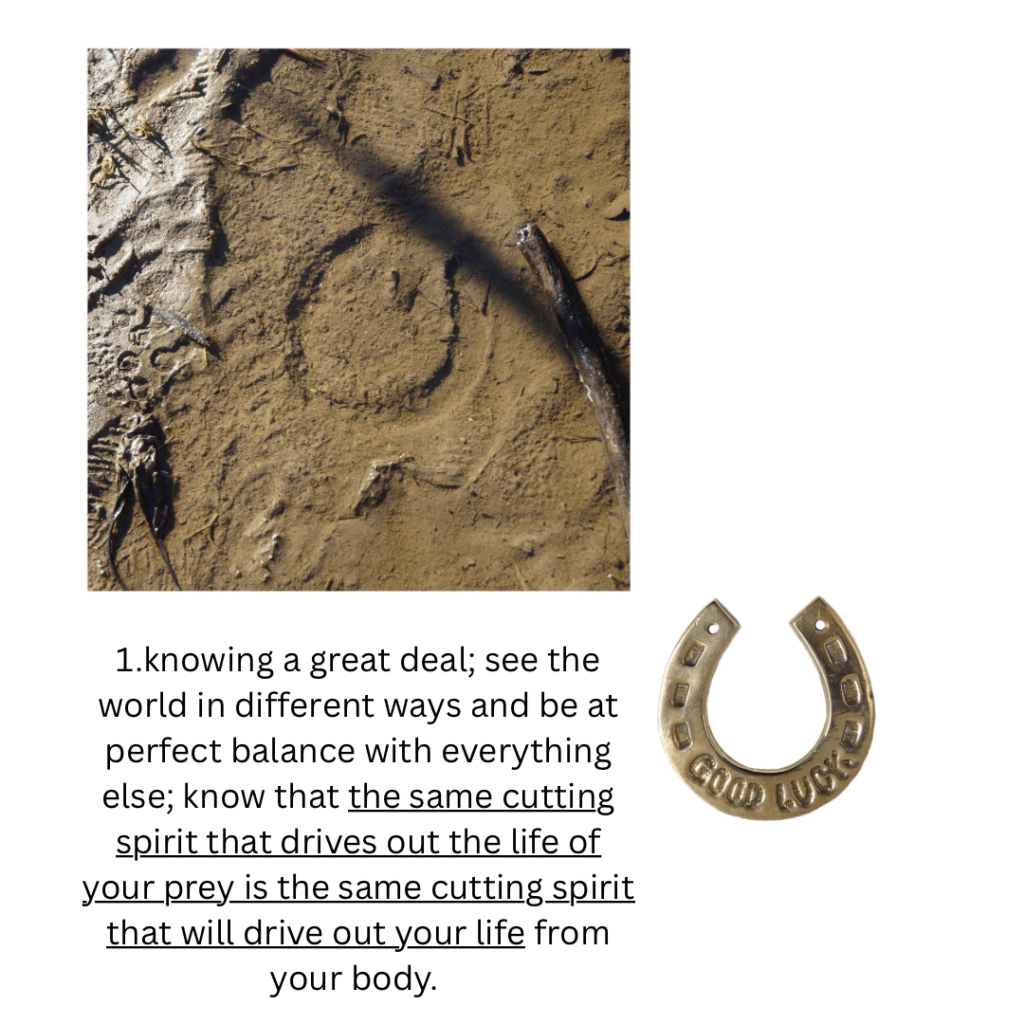
1. Knowing a great deal; seeing the world in different ways and being at perfect balance with everything else.  A hunter is guided by the deep understanding  that the same cutting spirit that drives out the life of his prey is the same cutting spirit that will drive out the life from his body. This understanding of equanimity can keep you grounded in life, it helps you to avoid taking things personally and being injured by arrows that were not aimed at you. In whatever ways you can, steer away anger from God, we know not of that Great Power and its ways, it is much better to see the world as balanced and equal.

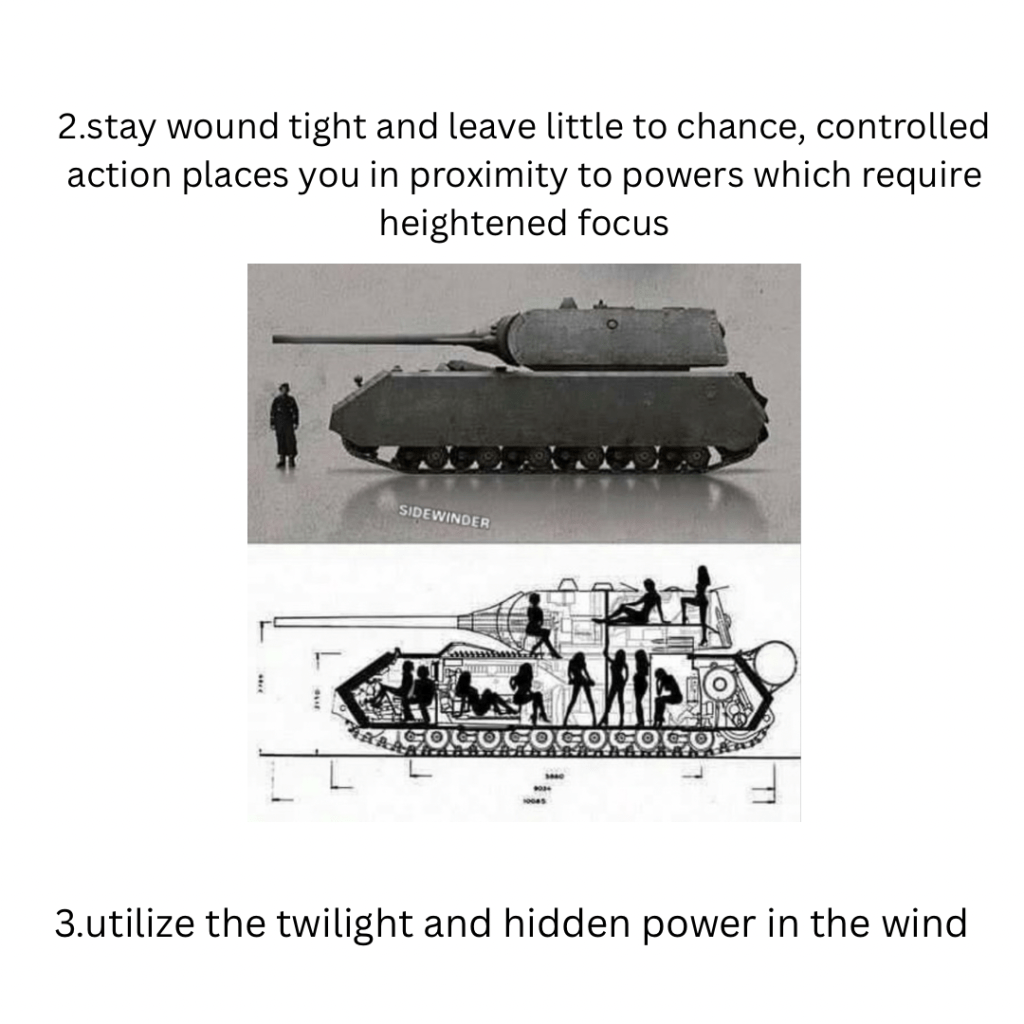
2. A hunter is wound tight and leaves little to chance. To be "wound tight" is usually a derogatory term. But to the hunter, being wound tight means remaining calculated and solely focused on his target at all times in order to capture that brief moment his target comes within reach. To catch an animal in a trap, the trap must be wound tight enough that the trigger mechanism is activated when contacted with. To be wound tight is to be ready for activation, ready for the taking. Things of power want to be hunted and cannot be easily stolen.

3. He uses the twilight and that power hidden in the wind. The twilight and wind share a similar cloaking ability. The same way that a game hunter cannot walk through a forest shouting "I'm on the hunt for a deer!", but instead must actually be on the hunt for it, it is good to stay cloaked during your pursuits.  Using the twilight and wind means staying in the in-between. Not in the shadows but not quite in the light; Not in the silence but not in the sound either.

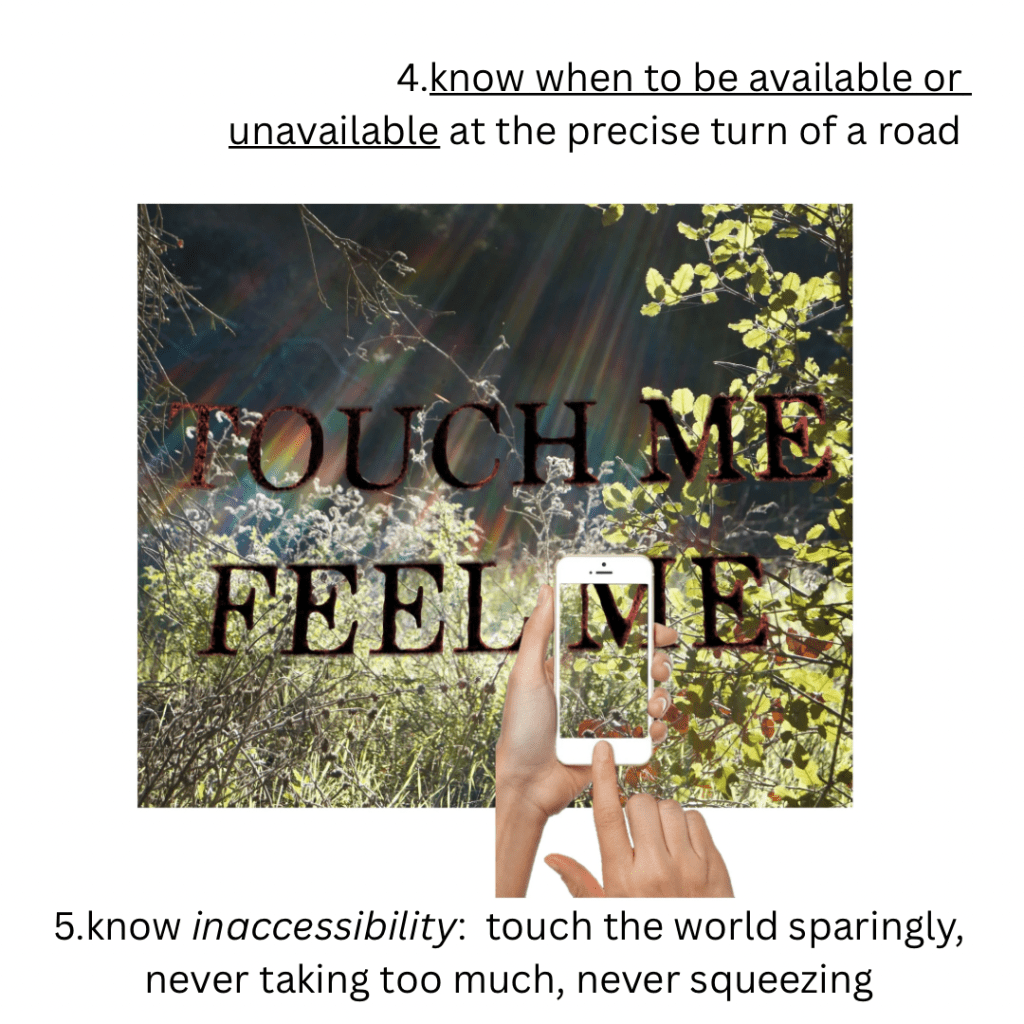
4. Knows when to be available or unavailable at the precise turn of a road. A hunter must know how to avoid being tracked. He must know when to be hidden from his prey and went to jump in front of it. Removing your personal history and stories from certain equations allows you to shed your reality and become opened up to "creatures worth stalking". A creature worth stalking is a pursuit that denies some of the stories you've attached your reality to. Becoming unavailable is to create mystery with yourself and thus allow you to pursue things you didn't see as possible before. A hunter without extra baggage is much more efficient. Sometimes at a random turn, you must make yourself available again, this means you must not entirely lose or ignore these stories, but know when to wear or use them.

5. Inaccessibility: touch the world sparingly, never taking too much, never squeezing. A hunter only seeks what sustains him. He does not carry extra carcasses he cannot skin, preserve, and consume. Know what sustains you and keeps you happy, do not take on too much or that which you cannot tend to; lest it rot and weigh you down.

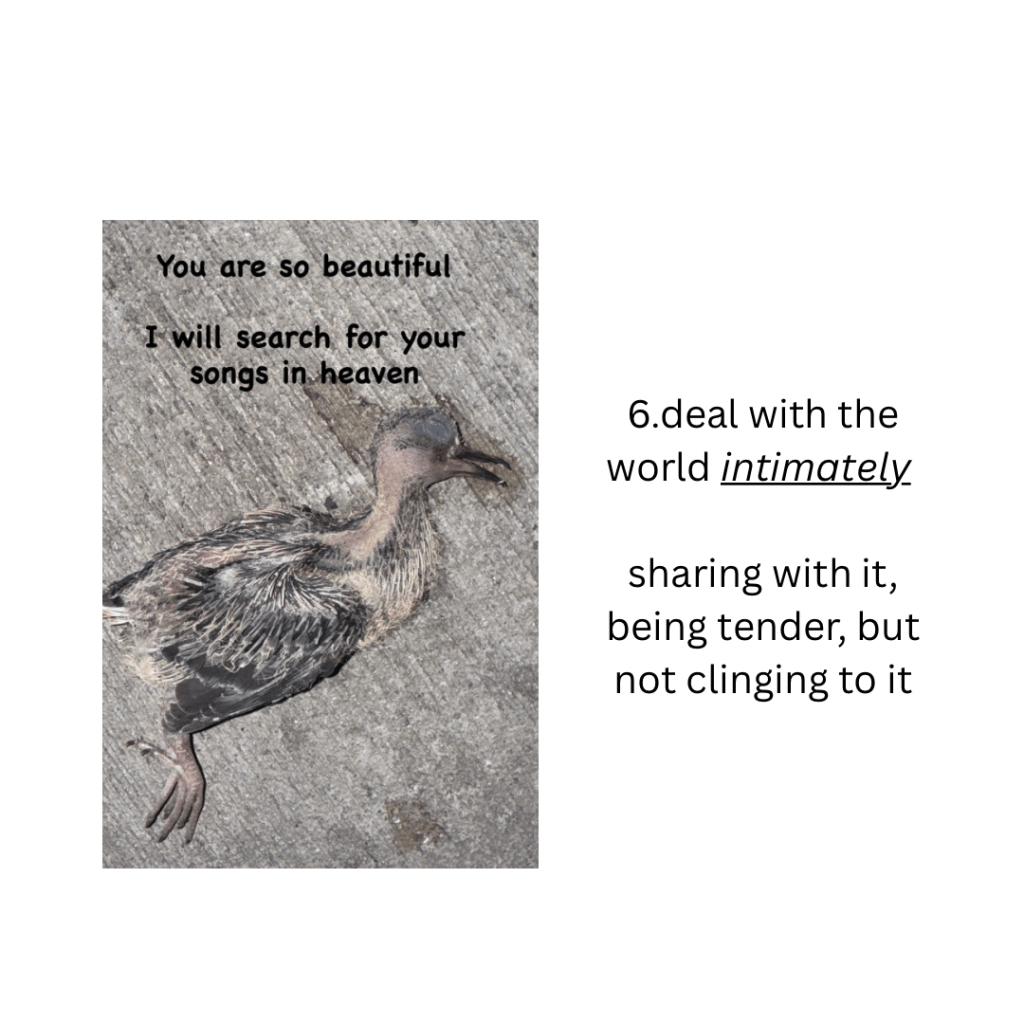
6. Deals intimately with the world. Touches the world, smells it, knows it well. A hunter must be in the world and study it intimately in order to pursue its creatures. He knows the shape of different animals tracks, the sounds of their calls, what their scat looks like, and he knows when the weather is turning by the scent of the air. A hunter cannot shut himself out or hide in a cave and expect to become a good hunter. A hunter is somewhat of an expert on the world because he observes it, respects it, and learns from it.  If you want to be a hunter, you have to be intimate with your life. Seek to understand yourself and the people around you as best as possible and learn the patterns of the world by observation. More specifically, deal intimately with the world you want to be apart of; the world that is your target.

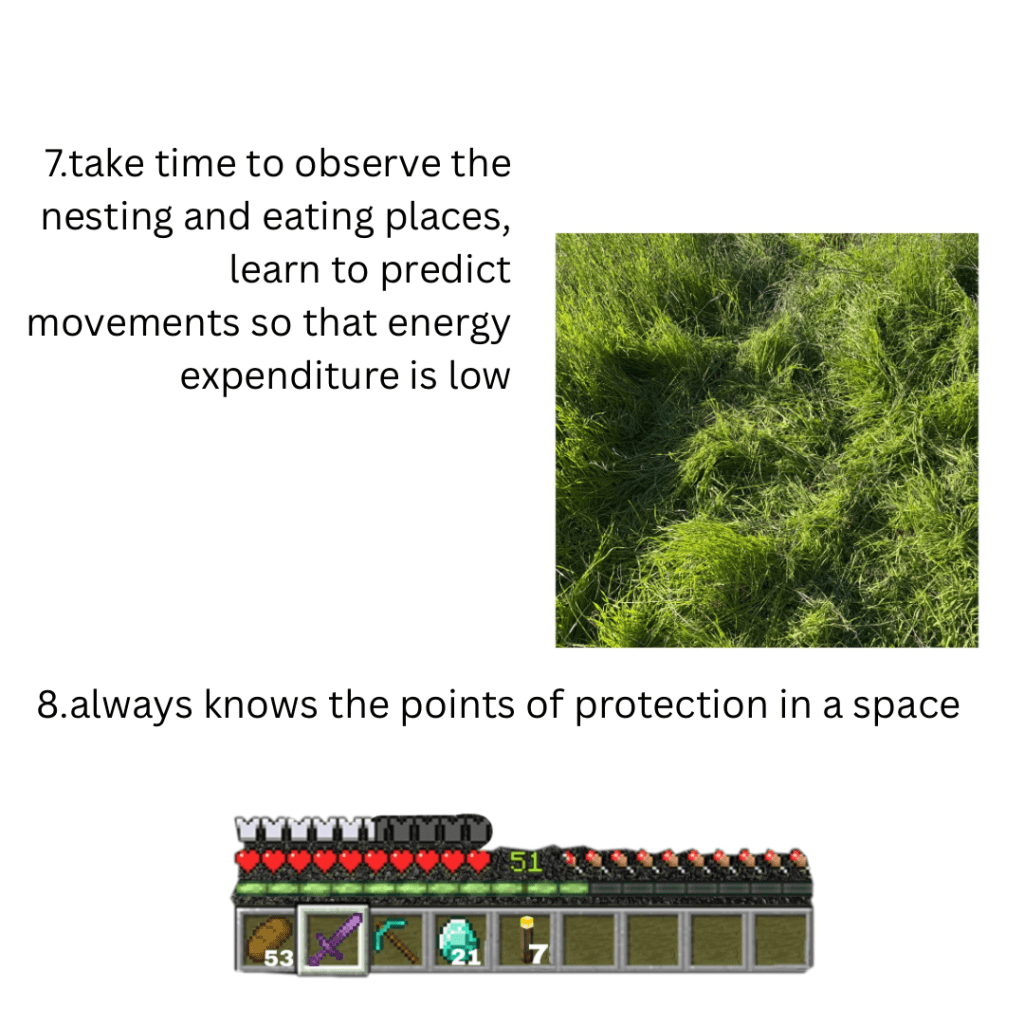
7. Take time to observe the nesting and eating places, learn to predict movements so that energy expenditure is low. Observation and attention to detail allows for more precise action. Precise actions allow you to hit your target while reserving as much of yourself as possible. Attention to detail will always keep you at the same pace as your prey, not falling behind or losing sight of them. A good hunter can predict the movements of his prey AND knows how to stay unpredictable so that he himself does not become prey.

8. Always knows the points of protection in a space. Know where you can avoid harm, where you can replenish yourself, or avoid being seen (especially when wounded). It's crucial that we keep track of the places that provide us security, nourishment, protection etc... Places of protection can be environments, but it can also be things that you do for yourself, tell yourself, or engage in. Points of protection are your psychological anchors in unseen or uncharted realms.

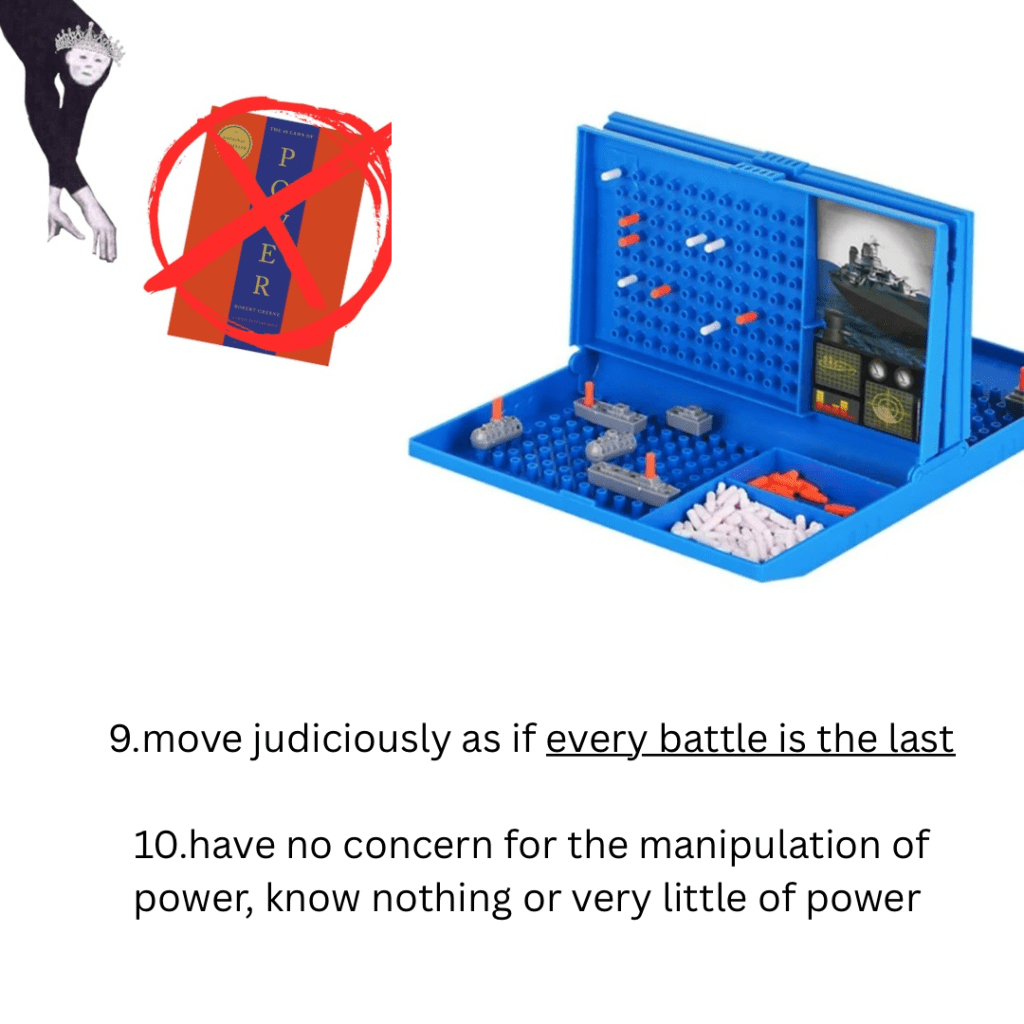
9. Moves judiciously as if every battle is his last. Any moment could be your last. Treat it as such. With reverence and consideration for everything you go after.

10. No concern for the manipulation of power, knows nothing or very little of power. A hunter sees the world as a place to hone and apply their prowess and skill, not as a place to store up power. A hunter sees the world as a place to hone and apply their prowess and skill, not as a place to store up power. A hunter seeks to expand on his skills and abilities not for influence but to obtain the object of his desire.
⌖
About the Author
“To ask me to verify my life by giving you my statistics … is like using science to validate sorcery. It robs the world of its magic and makes milestones out of us all.” -Carlos Castaneda
Carlos Castaneda (1925–1998) was a Peruvian-born anthropologist and enigmatic best-selling author. His books about his apprenticeship with a Yaqui shaman, Don Juan Matus, vividly detail strange accounts of shamanic training, hallucinogenic rituals, and journeys into a “separate reality.”
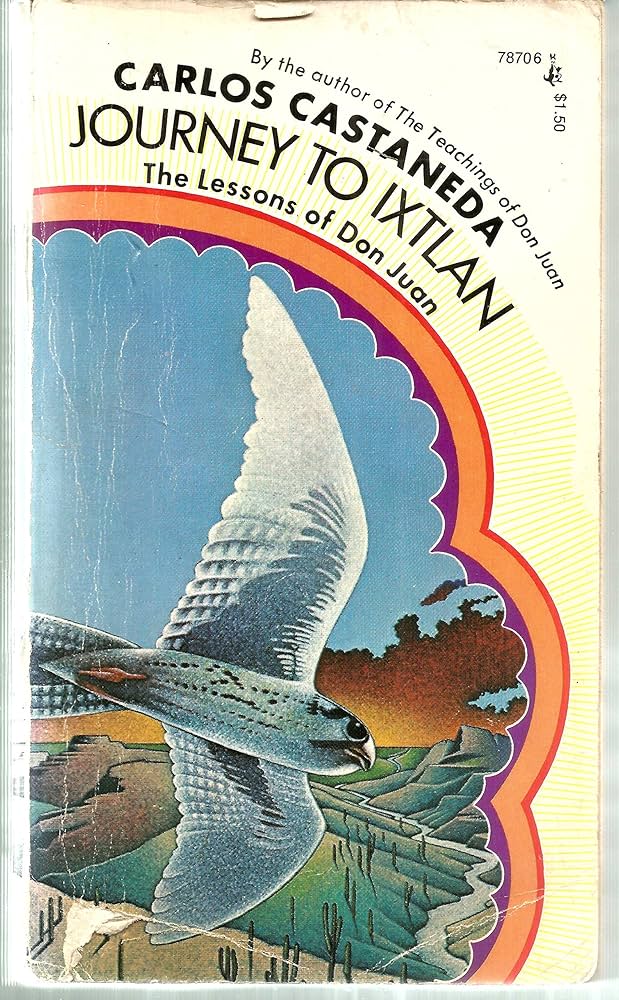
His narratives captivated millions and earned him a PHD from UCLA. Scholars later exposed major inconsistencies in his ethnographic claims, and although written as documented accounts, his work is now largely regarded as fictional. Castaneda himself was elusive and reclusive until his death.
Despite the controversy surrounding the validity of his work, his writings left a lasting imprint on modern spirituality, consciousness studies, and countercultural thought. One of Castaneda’s followers put it like this; “Either Carlos is telling the documentary truth about himself and Don Juan, in which case he is a great anthropologist. Or else it is an imaginative truth, and he is a great novelist. Heads or tails, Carlos wins.”
In this 1973 Times article on Castaneda, one gets a vivid sense of how Carlos was received during his life and how he responded to it. The article posed the provoking question: “Will Castaneda become the Dr. Faustus of Malibu Beach, attended by Mephistopheles in a sombrero?”
*I never write book reviews with the intention of telling you what a book is about. You can get that from Google. Instead, I share my artistic renderings, notes, and findings with the hope that it may spark inspiration in those the books are meant to meet. Special shoutout to my dear friend Stephanie at The School of Whispers Podcast for this recommendation. Love you Stephy!
With love, Chloeandclover ☘︎ ݁˖⋆xoxo


 Chloeandclover