
This is part two of my book review on Carlos Castaneda’s Journey to Ixtlan: Lessons from Don Juan. You can read part 1 “What Makes a Hunter” here.
Journey to Ixtlan is Carlos’ third book in his 4 book series. Though widely regarded as anthropological fiction, the books were published as non-fiction memoirs that detailed his apprenticeship and dialogues with the Yaqui shaman Don Juan. The lessons in Journey to Ixtlan are a progressive journey through the different modes of understanding that lead to becoming a sorcerer. In successive order these modes are; hunter, warrior, man of knowledge, and then sorcerer. The difference between these modes is the skill level, skills required, and the objective.
First and foremost, the difference between a hunter and a warrior is their relationship to Power. A hunter knows nothing or very little of power, but a warrior is a hunter of power.
power
noun
- Ability to act or produce an effect
– capacity for action or influence. - Possession of control, authority, or influence
– especially over people or events. - Physical or mental strength
– force, vigor, or energy - A source or means of energy
– such as mechanical or electrical energy. - A supernatural being, deity, or force. (capital P, Power)
power
verb
- To supply with power or energy
– to drive or operate. - To give strength or force to
– to enable or energize.
Power, defined, is an ability to influence. Through various trials, battles, and lessons, a person can grow in and store up their own “personal power”. Having a strong personal power allows one to access and use heightened abilities without being overcome by other (capital P) Powers. Through discipline and self-awareness a person can engage with and use power in a way that lets him dance between realities. If one does not have a strong personal power or is motivated by the idea of control of Power, Power will overtake him and become the thing that defeats his spiritual growth.
Now with a faint idea of Power in context to our book, here is a list of things that “make” or define a true Warrior.
𓀎
1. Being a hunter of power, seeks Power, on his way to it. A hunter of Power entraps it and stores it as his personal finding. He can see and sense when Powers are at play or when there are battles of Power around him. He makes himself known to Power. Through experiences with Power, a warrior builds and stores up his own personal power. Personal power, while different for each warrior, allows the body and mind to complete amazing feats. With enough personal power, a warrior can become a man of knowledge.
2. Dreams are real. The warrior has a place of recall to go to when dreaming, a sort of “re-spawn” point where he stores his resources and secrets become revealed to him. This is a psychic home, a kind of inter-concious dwelling, or domain. In the dream-dimension, reality is constructed by your own personal power and subconscious will. Together, your personal power and subconscious will create the arenas you need to prepare for the battles in the “real world”. The warrior uses this domain to train his abilities and further understand his personal power. Imagine a combination of a Minecraft bed (spawn point and psychic anchor) and the Jiu Jitsu Kaisen sorcery technique of domain expansion1 (perfection of personal power) as examples of the dream domain.
3. Buries himself in the dirt. A warrior buries himself for enlightenment and power. In the act of burying oneself, he is confronted with a silent and engulfing mimicry of death. By confronting the feelings associated with dying, he confronts his real and imminent death. This is the initiatory act of death2. A warrior must re-enact the feeling of dying to become more intimately aware of it and its power. Through this initiation, the warrior is renewed to undertake the task of perfecting his spirit in his daily life.
4. A warrior is aware of the cubic centimeter of chance. All men have a cubic centimeter of chance, but only a warrior is aware of it. One of his tasks is to be alert and contain the gumption necessary to grab it when it pops out in front of him. The goal is to never become too stupid, lazy, or busy that we don’t notice that chance peek out at us.
5. Is a pirate. Takes what is his and knows the world is a resource to be used, not exploited, but utilized. He understands the life behind all things and does not let them waste away but instead allows them to be fulfilled in their purpose.
6. Has the mood of a warrior. The mood of a warrior lies in his ability to both abandon and control himself at the same time; He can hold onto and let go simultaneously. In tough or fearful moments, a warrior is tuned to first calculate his survival and then let go and trust entirely in Power. He follows the “doing of strategy”. He uses tactics to lead him to victory, not force. He is not subjected to the whims of others because he knows when it’s important to steer the ship and when to ride as a passenger.
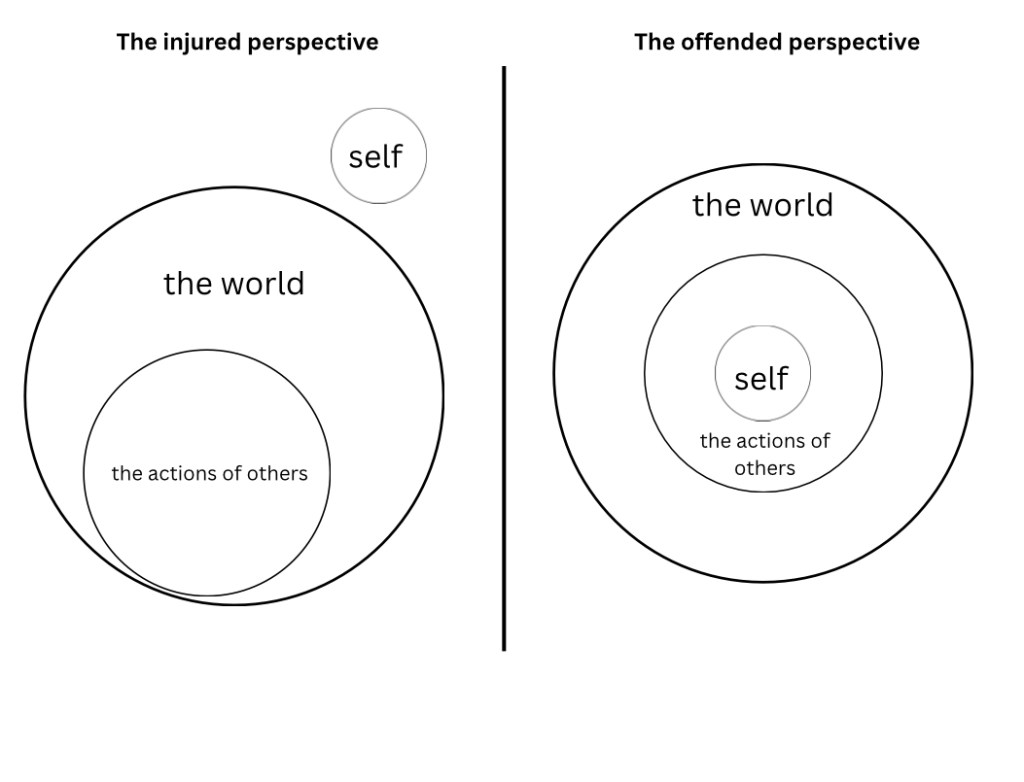
7. Can be injured, but not offended. A warrior takes offense to nothing. He understands the impersonal nature of the world. Taking offense to something requires a level of self-importance that tells you what you do and don’t deserve to experience– but this is not up to you. Offense also requires you to be at the center of others’ actions. And in the case of both human and animal, we are rarely at the center of others actions. This is self-centered thinking. As self-reliant and self-preserving creatures, we inevitably injure others in our attempts to survive. A warrior finds no offense in the lion chasing him, nor in the malicious actions of his fellow man. He knows the same hungry, driven, and resilient spirit moves them both. The warrior can conclude that men and lions are the same. The actions of others do not center the warriors world, rather the actions of others merely happen within the world. The warrior knows how to collapse the world and sit beyond it…
8. Capable of collapsing the world and restoring it again. “The World” around us is not a true reality but rather a manifestation of repeated descriptions, ideas, and dialogues we’ve been engaged in since birth. A warrior can choose to stop the dialogue and watch the world collapse. This is a way of seeing the other worlds upon worlds. The crucial thing that a warrior knows how to do is restore the world to his original reality. Think of this skill as a sort of spiritual groundedness; Like an agreement with your own reality that becomes an anchor and protects you from getting stuck in other realities. “Being stuck in other realities” is being in Psychosis. When you choose to peer into other worlds, you must know the way back to yours. Seeing that all “realities” are lies, or merely just forms of energy, a warrior understands that being hinged on any of them is a waste of time.
9. Never engages in thoughts of incapability. A warrior always proceeds as if he has a plan and does not engage in disbelief. He lives with strategy, not without folly, but not without intention either. There is no victory or defeat in doing, so he acts intentionally yet unencumbered. Strategy allows you to be in control and abandonment. A man who wastes his actions by engaging in disbelief is not a man who knows how to hunt power; Power does not make itself available to the one who considers himself incapable.
10. Engages in battles, or shows of power. A warrior recognizes Power and does not shy away from it. He understands life as an arena where he gets to engage in challenges that build his personal power, a regular man simply sees life as good and bad things. A warrior has the mindset of ‘life is happening for me” rather than “life is happening to me”. Engaging in shows of Power is a way of taking responsibility for ones being in the world.
11. Give thanks to the fog. A warrior never turns his back and departs from battles or shows of Power without atoning for the favors he’s received. Power can always overtake you, but if it doesn’t, then you’ve learned something and have increased your personal power, give thanks for this holy opponent.
12. A humble man; he can balance the terror of being a human with the absolute wonder of being a human. I don’t feel a need to expand on this.
13. Dances to his death. A warrior has a specific form and posture of power that he has naturally developed under the influence of his personal power, when he feels death tap his shoulder he goes to his re-spawn spot and carries out his final dance for death. He is not afraid of death because of the intimacy he’s built with it.
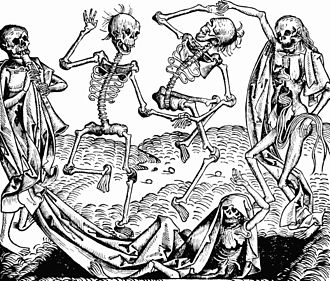
The Dance of Death (1493) by Michael Wolgemut, from the Nuremberg Chronicle of Hartmann Schedel
With love, Chloeandclover ☘︎ ݁˖⋆xoxo
𓃰
- “Domain Expansion” : https://jjkfanworks.fandom.com/wiki/Domain_Expansion ↩︎
- Rites and Symbols of Initiation by Mircea Eliade, “Symbols of Initiation” (page 13). https://archive.org/details/dli.ernet.6032/page/13/mode/2up ↩︎




 Chloeandclover