collection of writings and musings by Chloë Mae Whitley
The ‘P’ Word: Redefining and Reclaiming Power
Where my (Quest)ion About Power Began
Lately, I’ve been thinking about power. Like, obsessively thinking about power. The word first materialized in my field of contemplation while reading Journey To Ixtlan by Carlos Castaneda, the third book in a 4 book series. The books were published as non-fiction memoirs detailing his apprenticeship and dialogues with the Yaqui shaman Don Juan. Though widely regarded as anthropological fiction rather than ethnography, Castaneda’s writing remains philosophically and spiritually provocative. The lessons in Journey to Ixtlan are a progressive journey through the different modes of understanding that lead to becoming a sorcerer. In these books the word power is repeated hundreds of times in aphorisms such as “Power is personal” and “Everything we do, everything we are, rests on our personal power.” I didn’t understand why this word was so important at first, so I asked the universe to expand on it with me. As I explored, I came to understand the definitions of power differently than before. This essay is a personal exploration and journey through my understanding and does not encompass the many ways we can explore power for ourselves on the individual level – though I do hope it inspires you to take up a similar pursuit.
What “Power” Means To Us
power noun
Ability to act or produce an effect – capacity for action or influence.
Possession of control, authority, or influence – especially over people or events.
Physical or mental strength – force, vigor, or energy
A source or means of energy – such as mechanical or electrical energy.
A supernatural being, deity, or force.
power verb
To supply with power or energy – to drive or operate.
To give strength or force to – to enable or energize.
Power is a loaded word with many definitions. Although not inherently oppressive, it carries connotations that often are. Depending on our understanding of it — and our relationship to it — the word can make us feel either elevated or diminished. Our response to power is shaped by lived experiences: age, race, gender, culture, and location all play a role.
Even for me, a young white woman in Southern California, the word power carries a certain moral heaviness. It conjures images of ancient tyrants, extractive elites, and our own modern-day technocratic oligarchy full of pedophiles. In the Western canon, Robert Greene’s 48 Laws of Power also comes to mind, where power is framed largely as a strategic means of manipulation and deceptive social maneuvering.
But this is not the kind of power Don Juan describes, which raised my question: What kind of power is he pointing toward?
“Power, defined, is an ability to influence. Through various trials, battles, and lessons, a person can grow in and store up their own “personal power”. Having a strong personal power allows one to access and use heightened abilities without being overcome by other Powers… If one does not have a strong personal power or is motivated by the idea of control of Power, Power will overtake him and become the thing that defeats his spiritual growth.” {excerpt from my blog post What makes a Warrior? Lessons from Journey to Ixtlan by Carlos Castaneda (2/2)}
Structural Power vs. Personal Power
The word power then materialized in the context of my current yoga teacher training. We’ve been assigned to read Skill in Action: Radicalizing Your Yoga Practice to Create a Just World by Michelle Cassandra Johnson. In the foreword, Nikki Myers (creator of the 12 steps of yoga) explains that the scaffolding of “the matrix”, or the framework of our social constructs, is constructed to “delineate power and justify superiority”. I want to sit with this piece about delineating power. To delineate means to indicate the exact position of something. For centuries, we have created and upheld systems that delineate and choose exactly where power goes and circulates. “Power to the people” is almost an idiomatic phrase at this point because power does not go “to the people”, but circulates between the hands of the affluent, male, white, and married heterosexual1. Categories that do not represent the totality of “the people”.
As I dissect my own proximity to these oppressive powers (a personal process for now) I feel that I’ve been granted new insights on the word. By challenging my relationship to the word power, I’ve found actionable ways to conjure personal power in spite of unjust systems. I believe that through accessing our own personal power we can fortify our ways of existing in and beyond the muddled matrix. And maybe, just maybe, by seeing beyond it, we can be a catalyst to collapsing it.
I do not wish to spiritually bypass the reality of these systems existing, but I do understand that standing empowered in the face of systems that seek to disempower and disenfranchise you is crucial. Personal power is our fuel for change.
If we aim to dismantle the systems that disenfranchise us and divert power from our hands, the important question becomes:
How can we begin to access and increase our personal power?
First, Acknowledge our stories about power
Next, Take responsibility where we can
Then, Find our places of power
A Working Model for Accessing Personal Power
1. Acknowledge Your Stories About Power.
This is what I started doing when I took up this blog post. I didn’t think of power as something that was mine. It wasn’t something I related to at all. Power was reserved for others; the bigger and better others. Whoever that might be to me and it’s ever-changing. My stories of power have related to figures of violence, mostly. But what does this mean for me? It means that I am powerless. If power is not something I think I have access to and that the only ones who have access to it are malevolent, or don’t look like me, then I’m only reinforcing the belief that I’m incapable of enacting change. And isn’t that exactly what these power-concentrating systems want? For us, the people, to believe we’re weak and useless? Exactly. By first addressing where we stand with power, we can then orient ourselves on the path and begin journeying towards it. In any game, in any path, the first step is orientation; finding point A to get to point B.
2. Take Responsibility (Where You Can)
The victim mindset creates powerlessness. Again, I want to avoid spiritual bypass here, horrible things happen to us without meaning and out of our control. That is a truth. And there are things we are inevitably powerless to in this world and this matrix. But it’s also true that we get to choose how we engage with the world and the things that happen within it. This is the essence of personal power. In the 8-fold path of yoga, there are two foundational limbs called the Yamas and Niyamas. “Yamas” can be translated as “restraints” and Niyamas as “observances”. There are five Yamas and five Niyamas. The first Yama is “Ahimsa”, or nonviolence. The second Niyama is “Santosha” or contentment. These states are important and relevant because in both violence and discontent we find their origins are a feeling of powerlessness; the feeling that life is happening to you instead of for or through you. In powerlessness we have two choices; stay in it, or take responsibility and find power. If we allow our experiences with powerlessness to inspire us to take up power in a benevolent way then we have already begun to engage our personal power. Funny how that works, right? Power begets power. I find that the more I take responsibility for my existence the more that I feel I have the faculties to take care of it. What I mean is that in my personal power I find solutions and a sense of peace in the issues that arise within and outside of me. The balance of contentment and non-violence is a sign of personal power. Taking responsibility for oneself is a hugely important tenet in many different fields of sorcery and self-mastery. Throughout his books, Carlos Castaneda speaks to self-responsibility through the idea of offense vs. injury. In The Fire from Within Don Juan says, “Think about it: what weakens us is feeling offended by the deeds and misdeeds of our fellow men. Our self-importance requires that we spend most of our lives offended by someone.” Carlos emphasizes this again in Journey to Ixtlan when Don Juan tells Carlos, “Look at yourself. Everything offends and upsets you. You whine and complain and feel that everyone is making you dance to their tune. You are a leaf at the mercy of the wind. There is no power in your life. What an ugly feeling that must be!”(pg 120). In the Old Testament, the Hebrew word often translated as offense is ‘mikshol’, which means a stumbling block or obstacle. In the New Testament, the Greek word translated as offense is ‘skandalon’, a word that refers to the trigger mechanism of a trap or snare. This same word also gives origin to the English words ‘scandal’ and ‘slander’. Offense and lack of responsibility IS the snare that trips us up. If we hope to have personal power (strength, vigor, and ability to influence or enact change) we have to rid ourselves of direct victimization. Yes, we can be injured and hurt, but offense is what makes us weak. Sustain the injury and take responsibility for its healing.
Maybe take responsibility so far as ensuring nobody else around you has to sustain the same injury. This looks like standing up for other people who are oppressed, injured, or made to feel powerless. Practicing small acts of agency strengthens one’s capacity for larger acts of agency. Cassandra Johnson also speaks to the concept of responsibility through acts of agency. She says that through our acts of agency we can enact change. She says, “Sometimes, this looks like my listening if I am in a context where I have more power than others in the space; sometimes this action looks like me advocating with people who have less proximity to power”(p.76). If you can find agency and take up responsibility through your actions, you have found personal power.
“A man who is defeated by power dies without really knowing how to handle it. Power is only a burden upon his fate. Such a man has no command over himself, and cannot tell when or how to use his power.”
― Carlos Castaneda, The Teachings of Don Juan: a Yaqui Way of Knowledge
3. Find Your Places of Power
Finding places of power means finding the places and things that stir up a sense of power within you. Locations, actions, stances, amulets, mantras, etc… Anything that conjures you into a state where you understand your energetic force and ability to exert influence. Don Juan describes places of power as “places of enlightenment where one could be taught, where one could find solutions to dilemmas.”(p.106). For me, yoga is absolutely a place of power. I go to yoga to meet forces beyond myself; To hear from them and engage with them, to meet myself and my challenges, and to find ways through them. On my mat, I meet all of myself and the universe; beautiful and wretched. I take my warrior stance, maybe goddess, and I breathe my lion’s breath with my tongue out and eyes wide. This is my power stance. A deep forest or high mountain are often places of power for me. I’ll occasionally stumble upon a fairy circle, a large boulder, or an empty clearing that calls to me as a place of power. When they call, I allow myself to rest there and meet whatever is ready to be faced. Your places of power prepare you for battles of power.
“Nothing can temper the spirit of a warrior as much as the challenge of dealing with impossible people in positions of power. Only under those conditions can warriors acquire the sobriety and serenity to withstand the pressure of the unknowable”. – Carlos Castaneda, Fire from Within
A New Definition of Power
Power as I understand it now is not about domination and force, though it is often shown to us this way. Across many lineages of embodied practices and social critiques, a more personal and grounded definition of the word emerges. Power as inner capacity. Power as radical self-agency. Power as the skill of standing in one’s own by recognizing one’s abilities and responsibilities. This recognition of abilities, or personal power, puts you in a state of doing and withstanding amazing things. Whether the framework is social justice, shamanic teaching, or the disciplines of yoga, the teachings point to the same demand. We must develop the strength to act consciously within unequal and challenging systems without becoming consumed by them spiritually and psychologically in order to overcome them. To reclaim power is to build internal and communal capacities that allow us to act with clarity in a foggy world; a world where power is not distributed evenly. Personal power is not meant to erase or bypass injustice, but to make sustained resistance and action possible.
This is ongoing work and I’ll allow my thoughts to be tied up and anchored here for now. If you read this far, thank you. I’d love to hear your thoughts or reflections in the comments.
Reclaiming personal power is not about domination, but cultivating disciplined agency within unjust systems. I offer a three-part framework for developing personal power grounded in responsibility, self-awareness, and embodied practice.
One response to “The ‘P’ Word: Redefining and Reclaiming Power”
Oh! I like your note about orienting yourself on the path (I too tend to think of power as something others hold not me) great post, well done! Linda x


 Holding onto the stains, the oil in my sheets, a sign that you… Read more: infinity abounding
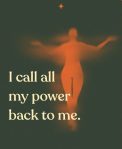 Reclaiming personal power is not about domination, but cultivating disciplined agency within unjust systems. I offer a three-part framework for developing personal power grounded in responsibility, self-awareness, and embodied practice.
 The following is a somewhat poetic stream of thought resulting from a conversation… Read more: gentle men don’t exist
 Seeing Black Eyes play live, crowds as shared bodies, deindividuation, and healing the angry teen
 Who will protect you when the world burns down?When the king wants to… Read more: one beast, many faces
 Smoke billows from my chimney and I wonder if it feels good to be… Read more: collecting the winter self
 This is part two of my book review on Carlos Castaneda’s Journey to… Read more: What makes a Warrior? Lessons from Journey to Ixtlan by Carlos Castaneda (2/2)
 There are many ways of knowing the world, interacting with it, and participating… Read more: What Makes a Hunter – Lessons from Journey to Ixtlan by Carlos Castaneda (1/2)
 How I’m embracing the year of the fire horse as the year of… Read more: Equestrian B*tch- lessons from the barrel races for 2026: year of the fire horse
 I don’t know what to say when I see you struggling
 Science says it’s intense solar activity. Ancestor says it’s a sign.
 Chloeandclover
One response to “The ‘P’ Word: Redefining and Reclaiming Power”
Oh! I like your note about orienting yourself on the path (I too tend to think of power as something others hold not me) great post, well done! Linda x
LikeLiked by 1 person